


A flue gas-fired steam generator uses the thermal energy of hot flue gases to generate process steam without additional fuel consumption. The waste heat contained in the exhaust gas is transferred to the feedwater via a heat exchanger and converted into usable steam.
Flue gas heated steam generators are often used to supplement existing steam systems and reduce burner operating times. AURA´s systems are individually designed based on exhaust gas temperature, volume flow and process requirements.
Industrial exhaust gases often contain significant amounts of energy what would otherwise be released unused into the atmosphere without heat recovery. This system can reduce or even replace conventional fired steam generators, or be used as a backup system. Using waste heat in this way reduces CO₂ emissions and contributes to environmental sustainability.
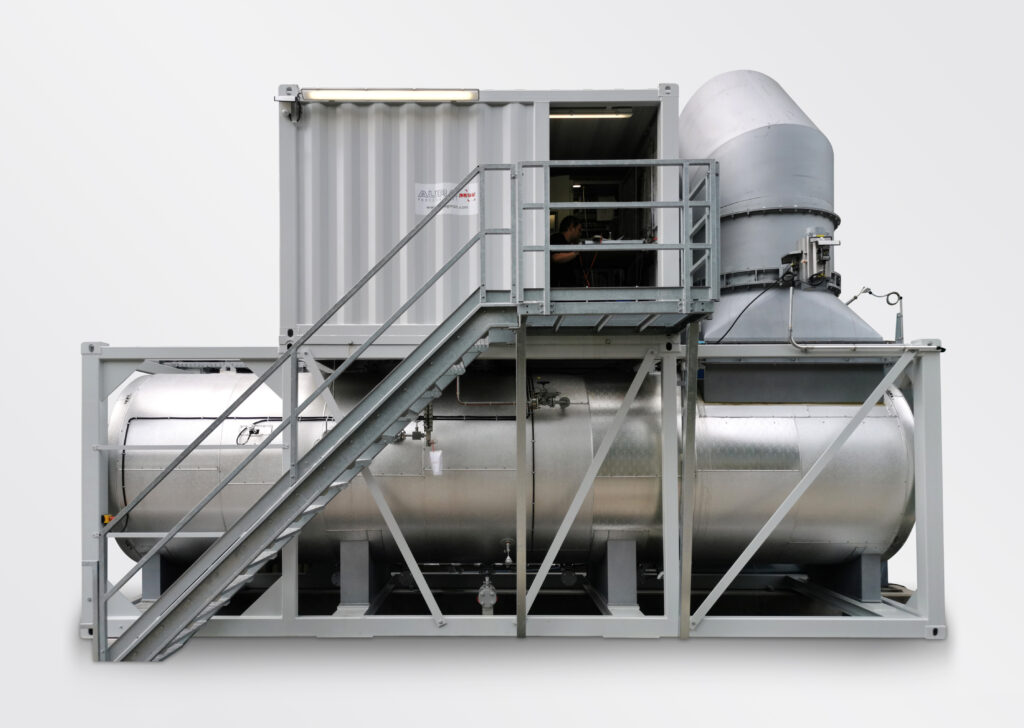
In industrial processes such as gas turbines, engines or combustion systems, hot flue gases with temperatures of several hundred degress Celcius are generated. The flue gas heated steam generator utilizes this energy:
Temperature and pressure are controlled automatically to ensure stable steam generation.
When exhaust gases with sufficiently high temperature and volume flow are continuously available.
Depending on the design, typically several hundred degrees Celsius.
In many cases, it significantly reduces fuel demand; complete substitution depends on the process.
Yes, integration into existing systems is possible.
Through automatic control of pressure, temperature, and feedwater flow.
Since no additional combustion is required, direct emissions are reduced.

After the click you can look directly into our calendar and choose a suitable appointment with one of our employees.