


Different Starting Conditions Require Different Planning Priorities
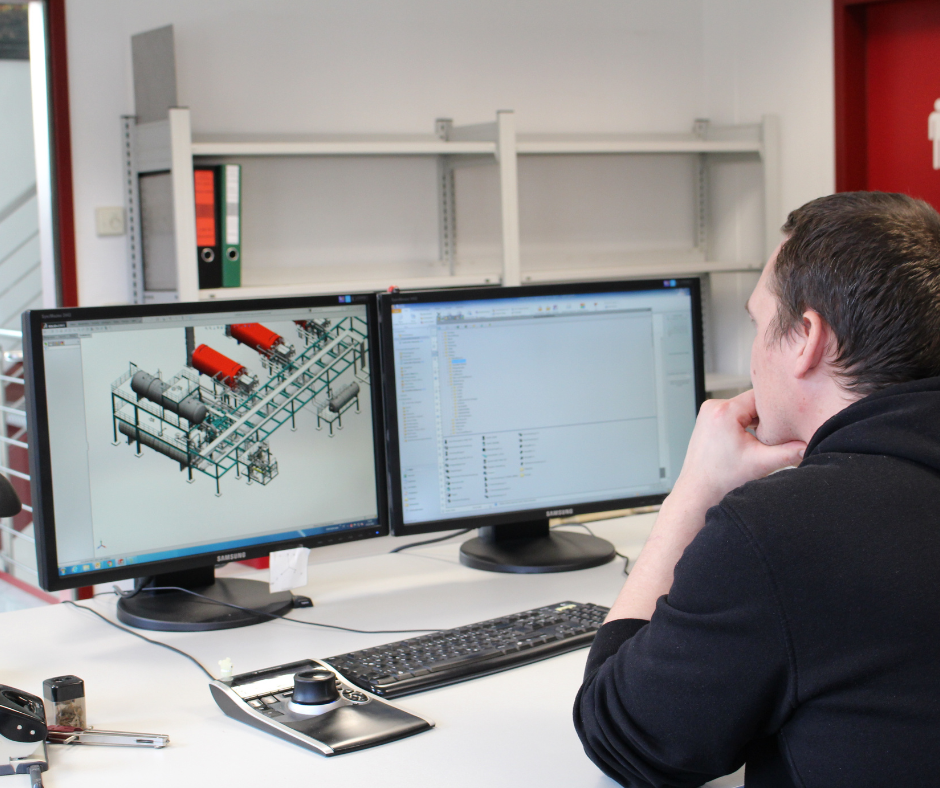
For new systems, the process heat system can be tailored to the actual needs of production from the outset. Capacity, temperature levels, heat transfer medium, energy supply, controls and heat distribution can all be planned early as one integrated system.
This involves considering more than just current consumers. Possible future expansions, redundancy requirements, maintenance access and integration into building and utility planning can also be incorporated into the plant concept. This creates the basis for a technically sound overall design and reduces the risk of later changes.
Typical engineering tasks include:
- Determining heat demand and the required capacity reserves
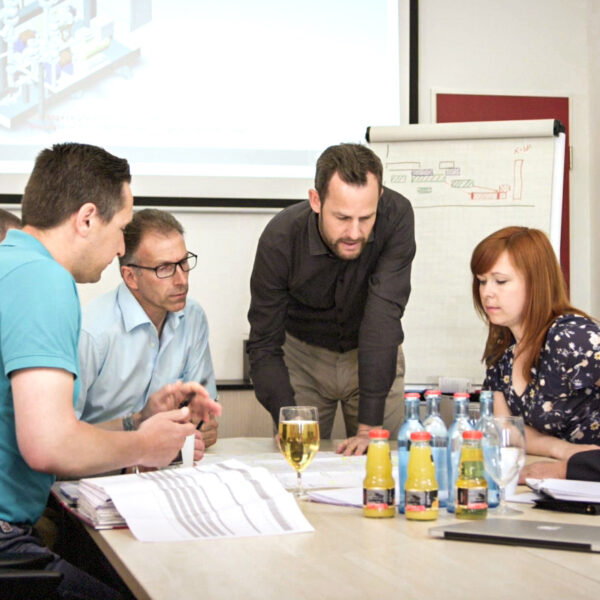
- Coordinating with production lines, furnaces, dryers and other consumers
- Selecting the heat transfer medium and heating method
- Developing the plant layout and piping routes
- Defining interfaces with energy supply, control systems and adjacent trades
- Considering future expansion stages
The earlier process heat planning is incorporated into a new-build project, the better installation areas, piping routes and technical interfaces can be coordinated with the overall design.
When expanding existing production, new consumers or production lines must be integrated into existing heating, piping and control structures. The first key question is whether the existing system has sufficient capacity, flow rate and control reserves.
AURA analyzes the existing supply system and assesses which modifications are required. This includes potential hydraulic interactions, additional load peaks, changed return temperatures and the simultaneous supply of multiple consumers.
Typical questions include:
- Is the existing heat generation capacity sufficient for the expansion?
- Can existing pumps and piping continue to be used?
- How will the new consumer affect the hydraulic behavior of the overall system?
- Are additional control loops or temperature levels required?
- Does the control system need to be expanded or modified?
- How can integration be implemented with the shortest possible production interruptions?
In this case, engineering provides the foundation for ensuring that the expansion is not viewed in isolation, but is integrated into the existing system in a technically controlled manner.
For existing systems, the focus is often not on complete replacement. First, it must be determined which components can continue to be used, where technical limitations exist and which measures will provide the greatest benefit for continued operation.
AURA evaluates the existing system design, available operating data and current requirements. Depending on the initial situation, individual components, control loops or the heat generator may be adapted or replaced. Electrification, heat recovery or expansion of measurement and control technology can also form part of the engineering work.
Possible focal points include:
- Assessment of the technical condition of existing components
- Review of capacity reserves and existing bottlenecks
- Adaptation to changed production conditions
- Optimization of controls, sensors and heat distribution
- Integration of additional consumers
- Assessment of electric or hybrid heating concepts
- Consideration of limited shutdown windows
- Planning of phased modernization
The aim is a solution that makes technical sense for the existing plant. This includes determining which parts can remain in use and where modification or replacement is necessary.
Depending on the location, process or technical boundary conditions, additional requirements must be considered during engineering. These influence, among other things, the design, component selection, piping routes, steel structures, controls and documentation.
For research and test facilities, for example, the focus is not on maximum production capacity but on flexibility, precise controllability, changing operating conditions or the simulation of defined test conditions. The engineering must therefore be tailored to the respective task.
International projects also often involve country-specific standards, certifications, grid conditions and requirements for transport, installation and system setup. Special site conditions – such as hazardous areas or seismically active regions – can also have a significant impact on system design.
The earlier these boundary conditions are considered during engineering, the better technical risks, design changes, additional costs and delays can be avoided over the course of the project.