- Energy Consumption
- Waste Heat
- Emissions
- Future Readiness
How existing process heating systems can be modernized through heat recovery, electrification, and targeted upgrades without requiring complete replacement.
Many existing systems continue to operate reliably. However, changing operating conditions may create the need for modernization:
The system operates reliably but consumes more energy than necessary or no longer operates within its optimal load range.
Flue gas, exhaust gas, or process exhaust air is discharged unused, although valuable heat could be recovered.
Stricter emission limits and corporate CO₂ reduction targets are increasing operational pressure.
The system was originally designed for different load profiles, process media, or operating temperatures.
Over the years, new regulatory requirements have become mandatory for many existing systems.
It is uncertain whether the system can continue to be operated reliably and compliantly in the years ahead.
Heat recovery refers to technical solutions that capture and reuse thermal energy that would otherwise be lost. This heat may originate from flue gas, exhaust gas, process exhaust air, or other process streams. By implementing heat recovery, operators can reduce energy consumption, operating costs and, depending on the fuel used, CO₂ emissions and other air pollutants from their process heating system.
Instead of generating process heat through combustion, heat is produced electrically. Electrification is both a technical and economic option, particularly where emission requirements, CO₂ costs, indoor installation, regulatory compliance, or long-term sustainability play an important role. For existing systems, electrification can also be implemented step by step.
Targeted upgrades are an effective option when a process heating system can continue operating but no longer fully meets today’s requirements. Typical reasons include new temperature requirements, changes in the heat transfer medium, or planned capacity expansions. The advantage is that the existing infrastructure can largely be retained while improvements are implemented precisely where technical or economic optimization is required.
Efficiency starts with day-to-day operation. Regular service and targeted maintenance help identify wear at an early stage and prevent unplanned downtime. They also improve long-term system efficiency and provide the basis for deciding whether additional measures such as system upgrades, heat recovery, or electrification are economically justified.
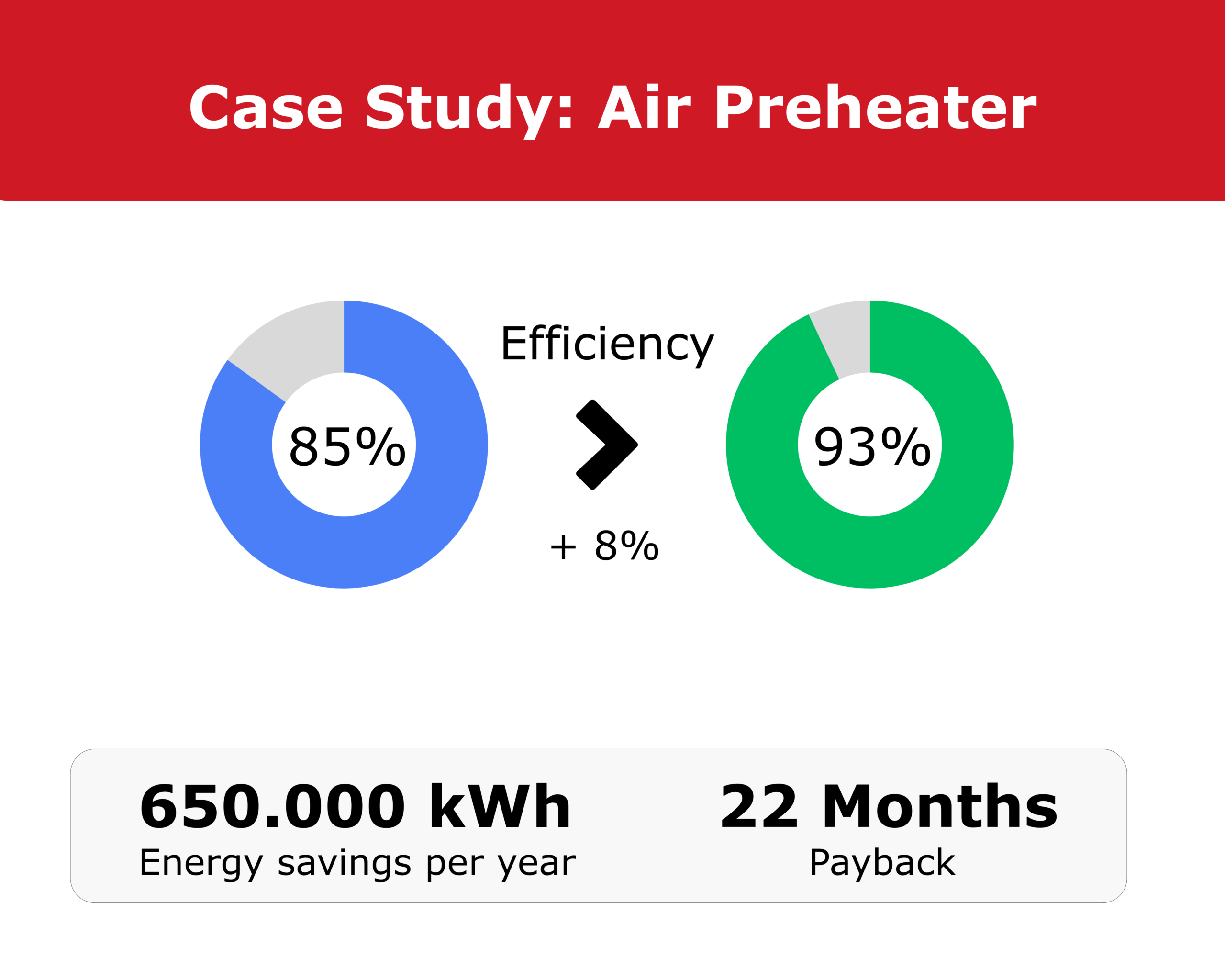
A fired thermal oil system with a heating capacity of 1,500 kW and a maximum operating temperature of 280°C was upgraded with an air preheater.
An air preheater uses the residual heat contained in hot flue gases to preheat the combustion air before it enters the burner. As a result, the burner requires less fuel to achieve the required process temperature. Fuel consumption decreases while the overall efficiency of the fired system increases.
Before modernizing an existing system, technical, economic, and regulatory aspects should be evaluated together. The following questions help identify and prioritize suitable measures:
We would be pleased to assess together with you which modernization measures are appropriate for your process heating system.