Das AURA Logo in klein und weiß

450°C process heat

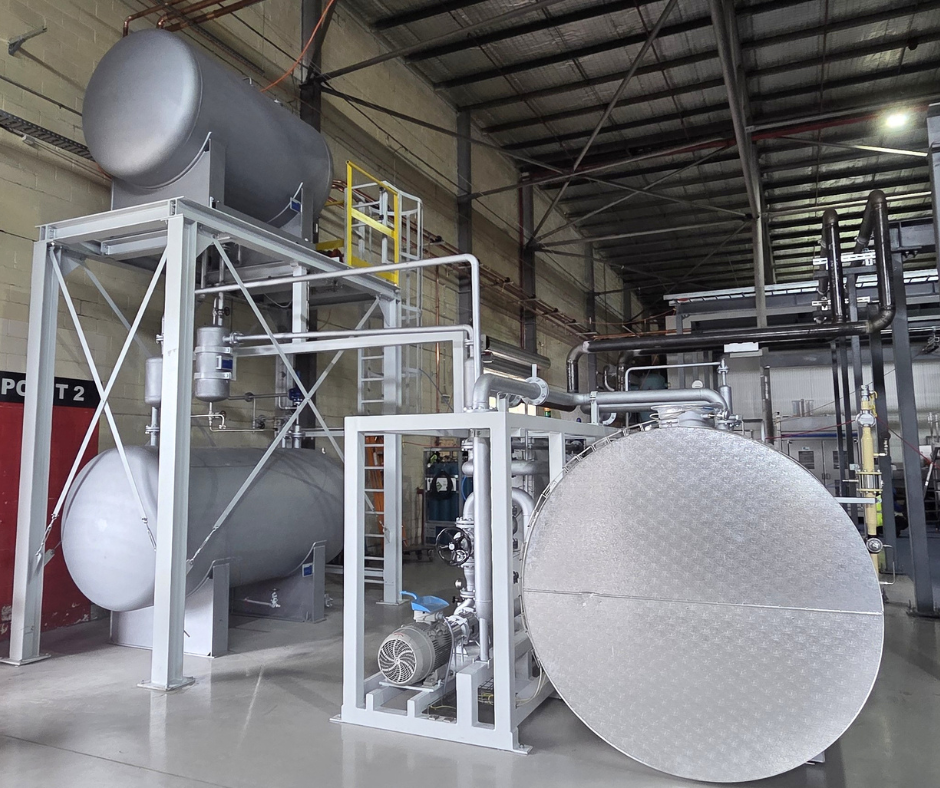
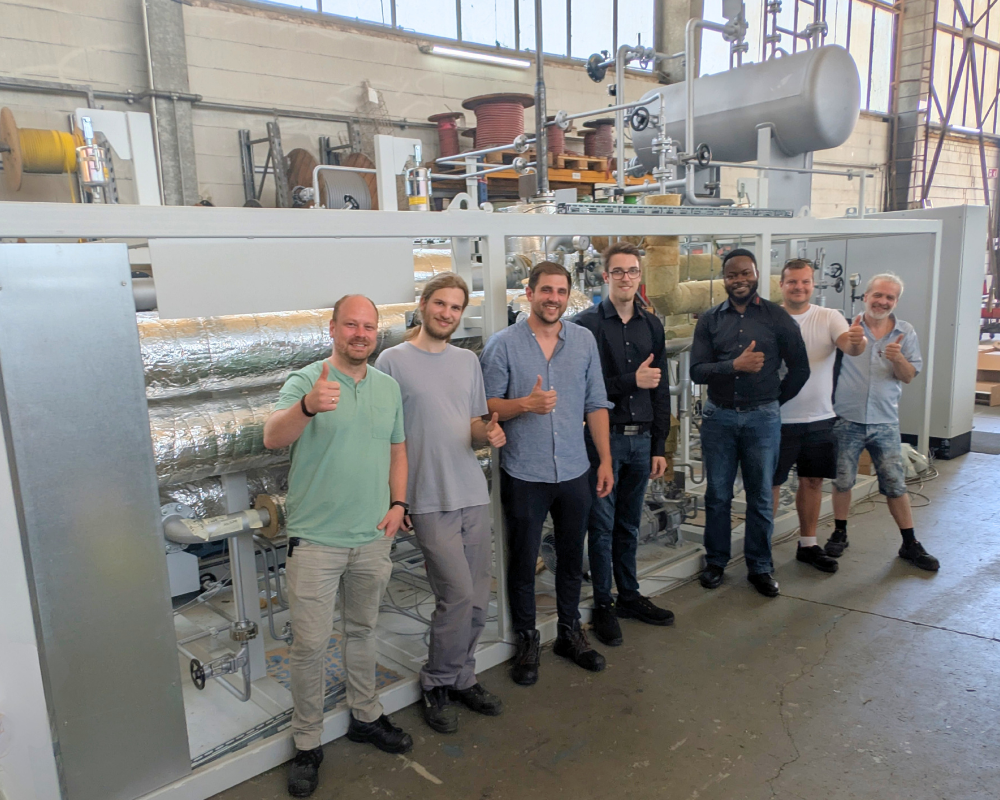
450°C process heat? Delivered! High-temperature process heating is advancing step by step. For a long time, around 400°C was considered the practical limit. Today, new heat transfer fluids and optimised system components are pushing that boundary significantly further. We recently had the ideal opportunity to put this development into practice. For Circutec, we engineered an electrically heated thermal oil system designed for operation at up to 450°C. The system enables them to test and further develop its pumps under realistic test-bench conditions at these exceptionally high temperatures. With a heating capacity of 150 kW, the system heats the thermal fluid to as much as 450°C while accurately reproducing defined and demanding heating and cooling profiles. This allows different pump sizes to be tested under realistic operating conditions and across a range of flow rates. The system has also been designed with sufficient flexibility to operate with different heat transfer fluids. Key requirements for high-temperature process heating include:– specially selected synthetic heat transfer fluids– precise specification of every component for the applicable pressure and temperature conditions– a comprehensive safety concept that goes beyond the minimum components required by applicable standards Over the past few years, we have successfully completed several projects operating at 400°C. For this system, we were able to build on the high-temperature engineering standards developed through those projects. Following successful acceptance testing at our facility, the system has now arrived at Circutec, where installation and commissioning are underway.   The high-temperature heat transfer fluid used for this project is supplied by Processtherm GmbH. Processtherm provides the heat transfer fluid and also supports Circutec with technical expertise during its application.   We are proud of this project and pleased to have reached this new milestone together with Circutec. We are excited to see how high-temperature process heating will evolve in the coming years and look forward to being part of this development!  

Save €40,000 per year AND receive funding for it as well

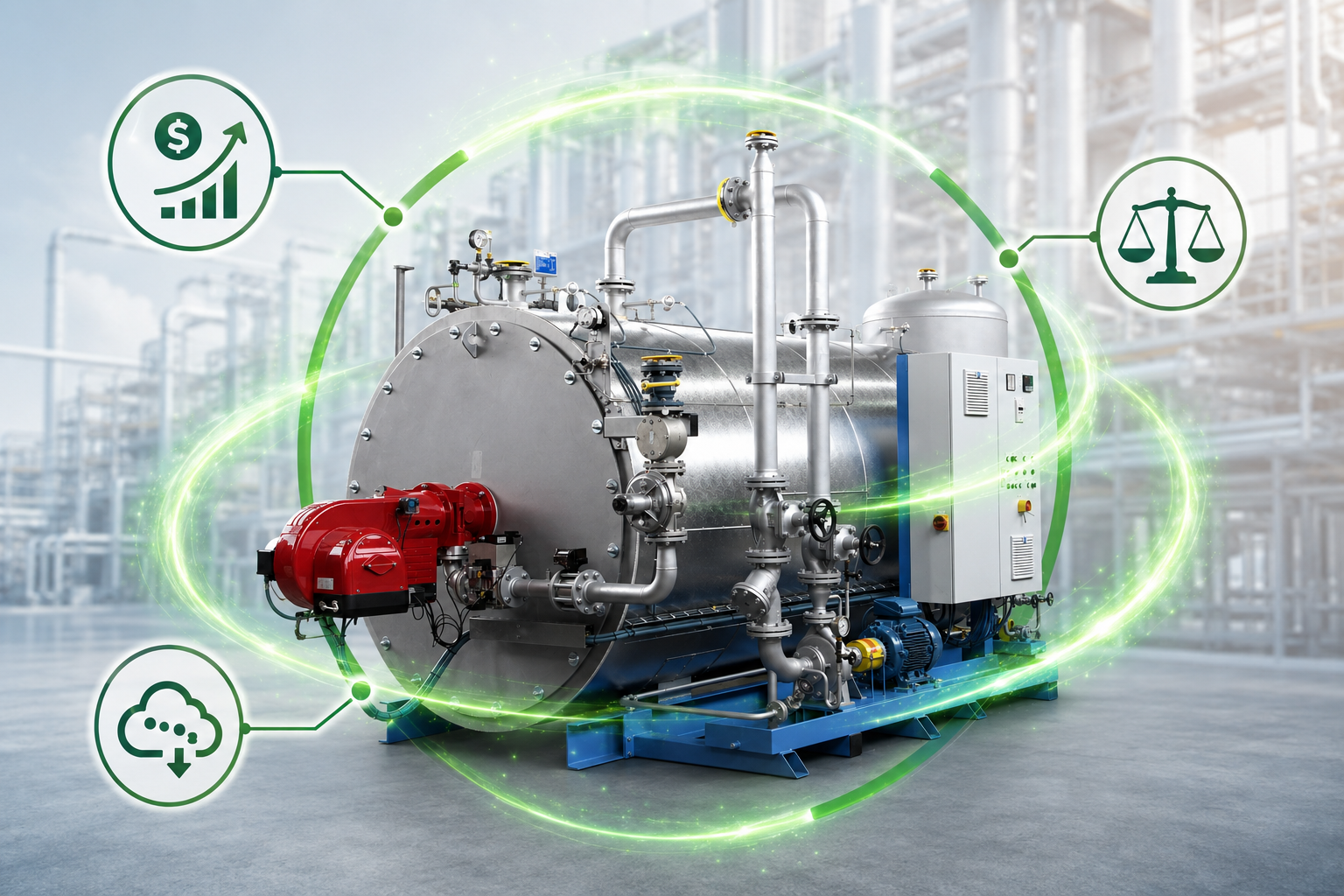
Save €40,000 per year AND receive funding for it as well In the previous post, we showed how a customer from the food industry increased the efficiency of its system to 93 percent by installing an air preheater. As a result, the company now saves around 677,000 kWh of gas and approximately €40,000 in energy costs each year.* What we had not yet mentioned: The customer also received funding for this modernisation project! Especially when investment budgets are limited, funding can make THE difference in determining whether a project is economically viable. Important to note: AURA is not a funding authority and does not make decisions regarding the approval of funding. In Germany, the relevant requirements are defined by the responsible institutions, such as BAFA, and always depend on the specific project. However, based on our project experience, we know that measures such as heat recovery, energy-related system optimisation or electrification may be eligible for funding, provided that the relevant technical and formal requirements are met. That is why we support our customers at an early stage in assessing key questions: ✔ Is the planned measure technically viable? ✔ What level of energy savings is realistic? ✔ Could the project potentially qualify for funding? The final assessment of eligibility and the application process are handled by the relevant funding authorities or appropriately qualified funding consultants. Our recommendation: Do not wait until shortly before the investment decision to review potential funding programmes. When funding opportunities are considered at an early stage, they can significantly improve the economic viability of a project and make the investment decision easier. Please note: This information applies exclusively to funding programmes in Germany. Different regulations and programmes apply in other countries. *Actual savings depend on the applicable gas price.

Save 40.000 Euro with Airpreheater

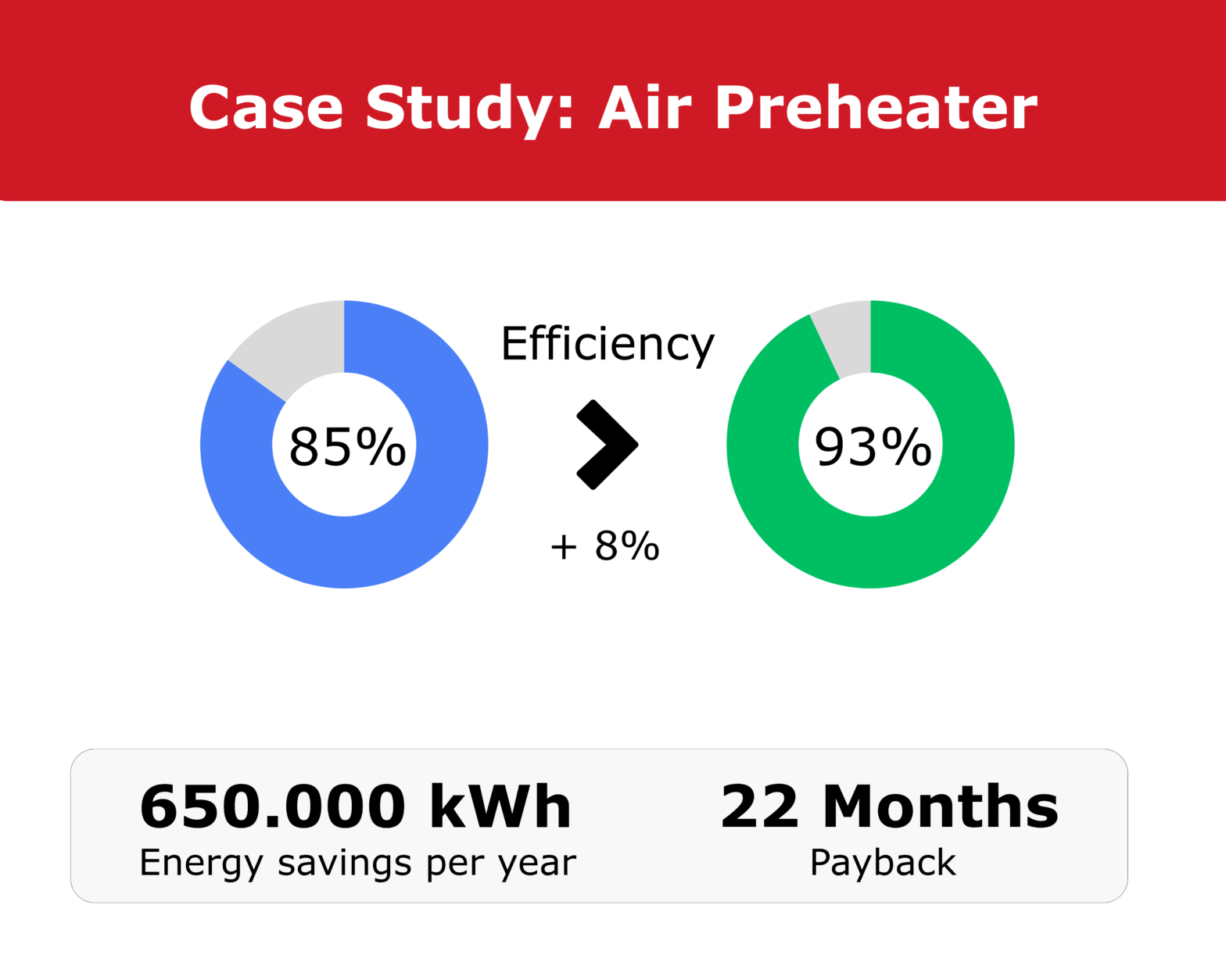
Save €40,000 in energy costs per year – without replacing the system Did you know that heat recovery can significantly increase the efficiency of existing systems while reducing operating costs? In many cases, this requires only minimal intervention in the ongoing process and a comparatively low investment.   A practical example: Our customer from the food industry produces potato chips and uses our fired thermal oil system to heat the frying oil.   System data: 1,500 kW heating capacity Maximum operating temperature of 280°C Approximately 5,000 operating hours per year System efficiency of 85%   AURA integrated an air preheater into the process: System efficiency increased to 93% Annual gas consumption was reduced by approximately 677,000 kWh The customer saves around €40,000* per year The investment in the air preheater pays for itself in just 22 months   Heat recovery is an attractive option wherever usable waste heat is generated. In fired systems, an air preheater is particularly effective because hot flue gases are readily available. This energy is used to preheat the combustion air, thereby reducing the amount of fuel required. *Depending on the gas price.

Retrotfitting and modernization of existing systems

How to Optimize Your Existing System Many operators of process heating systems are currently facing significant financial pressure. The market conditions have changed considerably, driven by factors such as high energy prices, strict emissions requirements, and increasingly limited investment budgets. As a result, investing in a new system is currently not feasible for many operators.   The good news: The greatest potential for efficiency improvements often lies not in a new system, but in the existing one! We have outlined the options available to operators for improving the efficiency of their existing systems in a detailed article: Learn more

Operators under pressure

Operators under pressure For more than 44 years, we have been engineering and manufacturing industrial process heating systems. During that time, one thing has become increasingly clear: today’s operators are under more pressure than ever before.   Rising energy prices, increasing CO₂ costs, stricter emissions regulations, expanding reporting requirements, and tighter investment budgets are changing the economics of industrial process heating. As a result, many companies are facing the same questions:• Reliable systems have become increasingly expensive to operate.• Valuable waste heat remains unused.• Compliance and emissions reporting require additional resources.• Existing systems may no longer meet future economic requirements.• Complete replacement is often difficult to justify. However, these challenges do not necessarily mean that a system is outdated. In many cases, the equipment is still technically sound. The real issue is that operating conditions have changed.That raises an important question: Where can meaningful improvements be achieved without replacing the entire system? A good starting point is to ask:• Is recoverable heat available from exhaust gases or process air?• How many hours does the system operate each year?• Can the recovered heat be used elsewhere in the facility?• Will the system remain in operation for years to come? If you can answer “yes” to one or more of these questions, there is a good chance that your existing system has optimisation potential that often goes unnoticed in day-to-day operation. At that point, the question is no longer whether optimisation is possible, but how. 

Reliable Process heat for Australias Baking Industry

Reliable process heat in Australia A few weeks ago our colleague Brendan Owen was in Melbourne, Australia, to support the installation of a fired thermal oil system. The system is part of a completely new baking line for a large bakery with several branches in the Melbourne area. The new line produces par-baked, packaged rolls and loaves. This requires heating an oven in which the process conditions have to work together with particular precision: temperature, heat flow, air circulation, humidity, and baking time all play a decisive role in how volume, crust, browning, and residual moisture develop. This is where we come in: With a heating capacity of 1,250 kW and an operating temperature of 320 °C, the system provides the thermal output required for the industrial baking process. The closed thermal oil system enables stable and uniform heat supply, a key prerequisite for avoiding temperature deviations in the oven and supporting reproducible baking results over long production periods.   A few weeks after the installation, our service technician was on site and successfully commissioned the system. We are pleased that we were able to draw on our many years of experience with critical baking processes for this project and that the system is now running reliably in daily operation!

Our latest project: Combining Electrification and Thermal Energy Storage

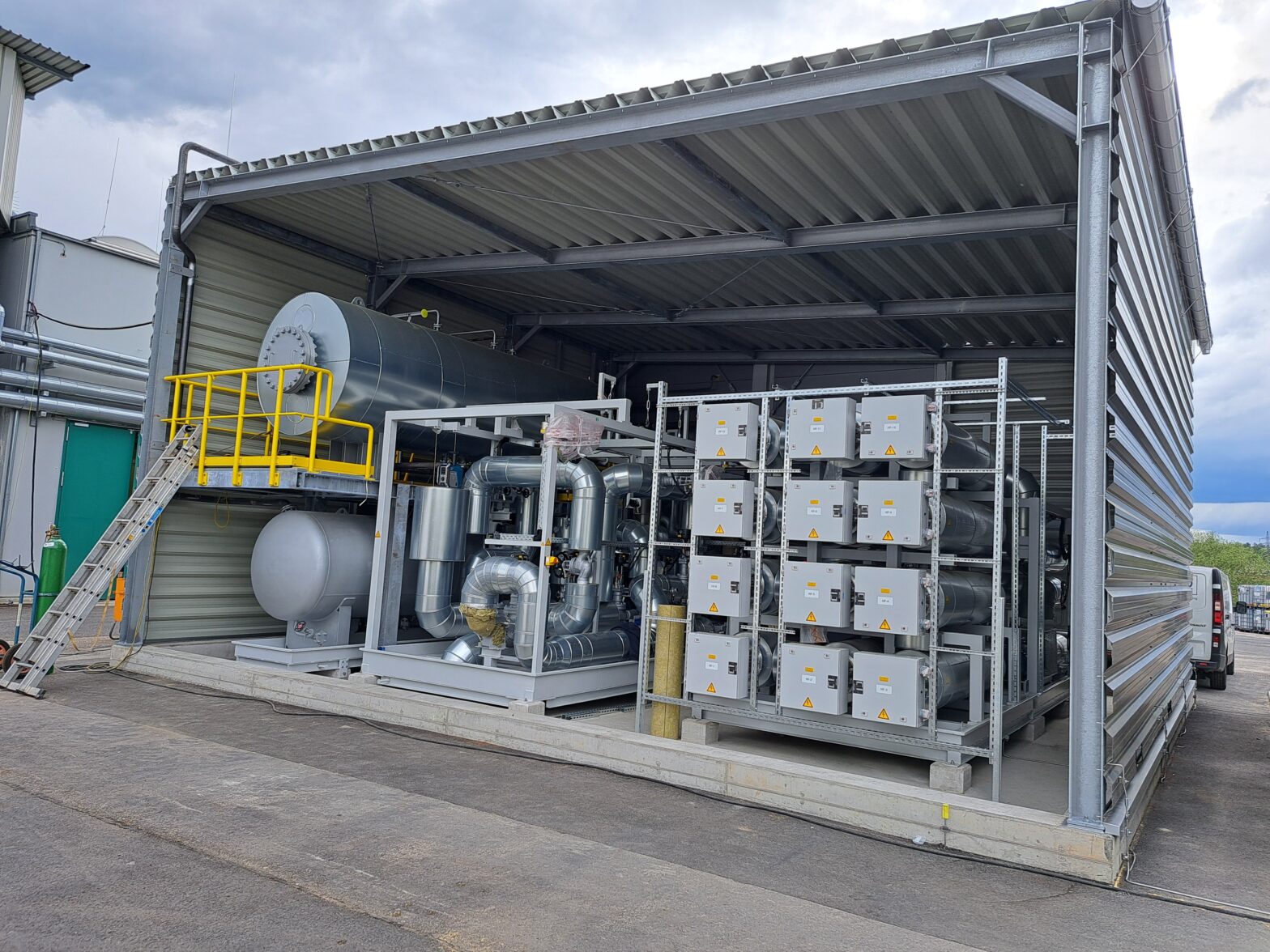
Electrification and Thermal Energy Storage Recent developments once again highlight a key reality: oil and gas prices are, and will remain, highly volatile. For companies with significant demand for industrial process heat, this is no longer just a cost factor, but a strategic risk. The question is: how can businesses reduce their exposure to this dependency? One key solution is the electrification of processes, ideally powered by renewable energy sources such as solar and wind. In practice, however, companies often face two major challenges:1. Solar and wind power are inherently intermittent2. Energy must be available exactly when needed, forcing companies to purchase electricity from the grid (often at high cost) during peak demand periodsAn effective way to bridge this gap is the use of thermal energy storage systems. These systems allow energy to be absorbed when it is available or inexpensive, and released later as heat when required.   An effective way to bridge this gap is through the use of thermal energy storage systems. These systems make it possible to store energy when it is available or cost-effective and release it later as heat when it is needed. We recently had the opportunity to support the implementation of such a solution: The project combines AURA’s 3 MW electric heater with a thermal battery from our partner ENERGYNEST, providing a total storage capacity of 12 MWhth. Electricity is sourced either from the customer’s on-site PV system or from the grid when electricity prices are low. With this integrated solution, the customer can: Cover more than 70% of the demand of a production line Generate over 3 GWhth of heat per year Save 3.5 GWh of natural gas annually And reduce CO₂ emissions from production by more than 700 tonnes per year   For us, this project clearly demonstrates the significant potential of combining electrification with flexible energy use – and how practical and scalable these solutions have become today.

AURA in german television

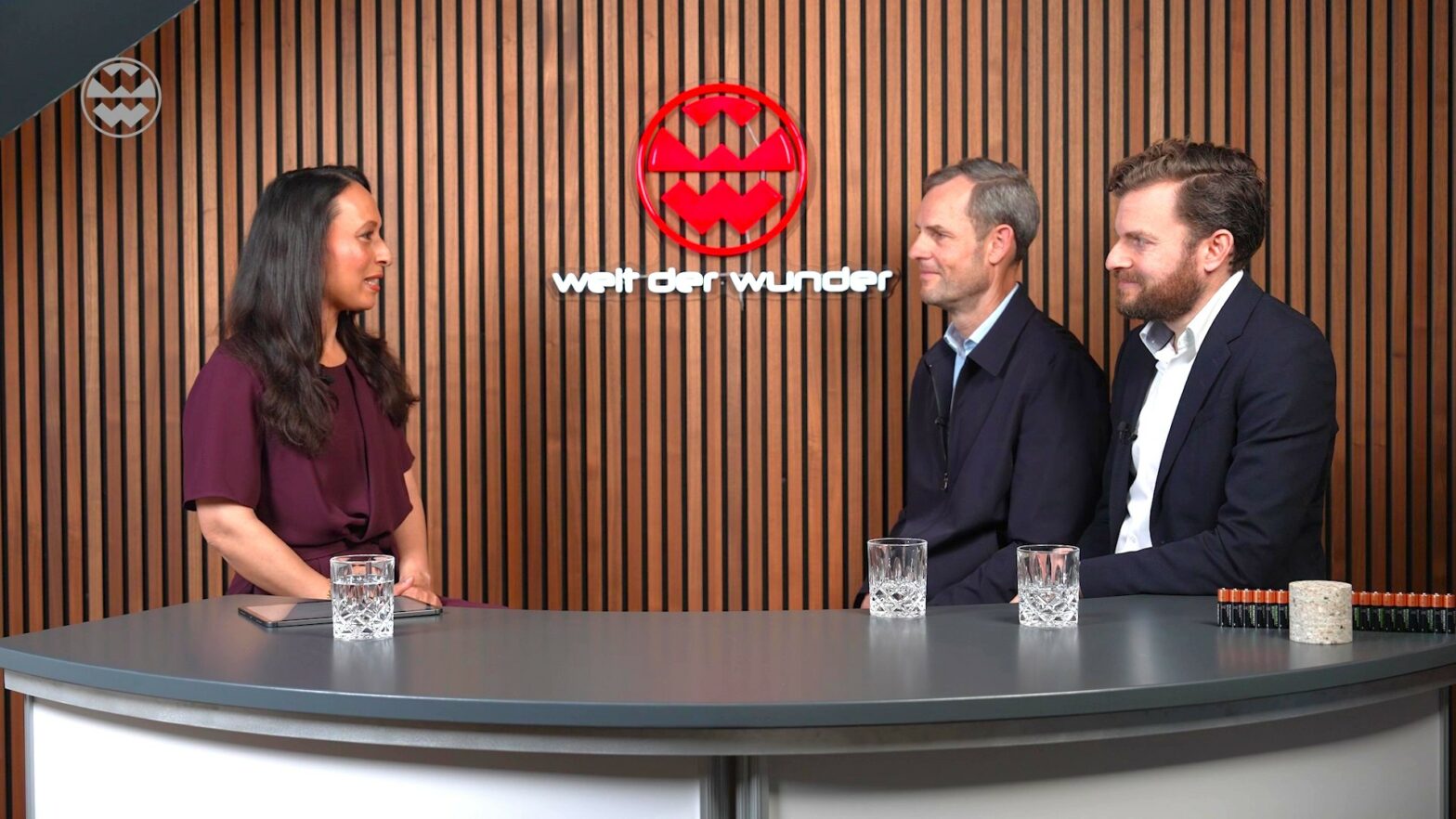
Future-Proof Industrial Process Heat Through Electrification and Thermal Energy Storage Industrial process heat is undergoing a fundamental transformation. Volatile energy markets, increasing efficiency requirements, and the need to reduce emissions are reshaping the demands placed on industrial heat solutions. To the Interview In this interview, Patric Burkhart (AURA) and Alex Robertson (ENERGYNEST) explain how the combination of electrification and thermal energy storage enables flexible, demand-driven process heat. They also present a joint project that demonstrates how AURA and ENERGYNEST have successfully put this concept into practice, highlighting the technology’s functionality and its potential for a more sustainable industrial future.

AURA as Hidden Champion

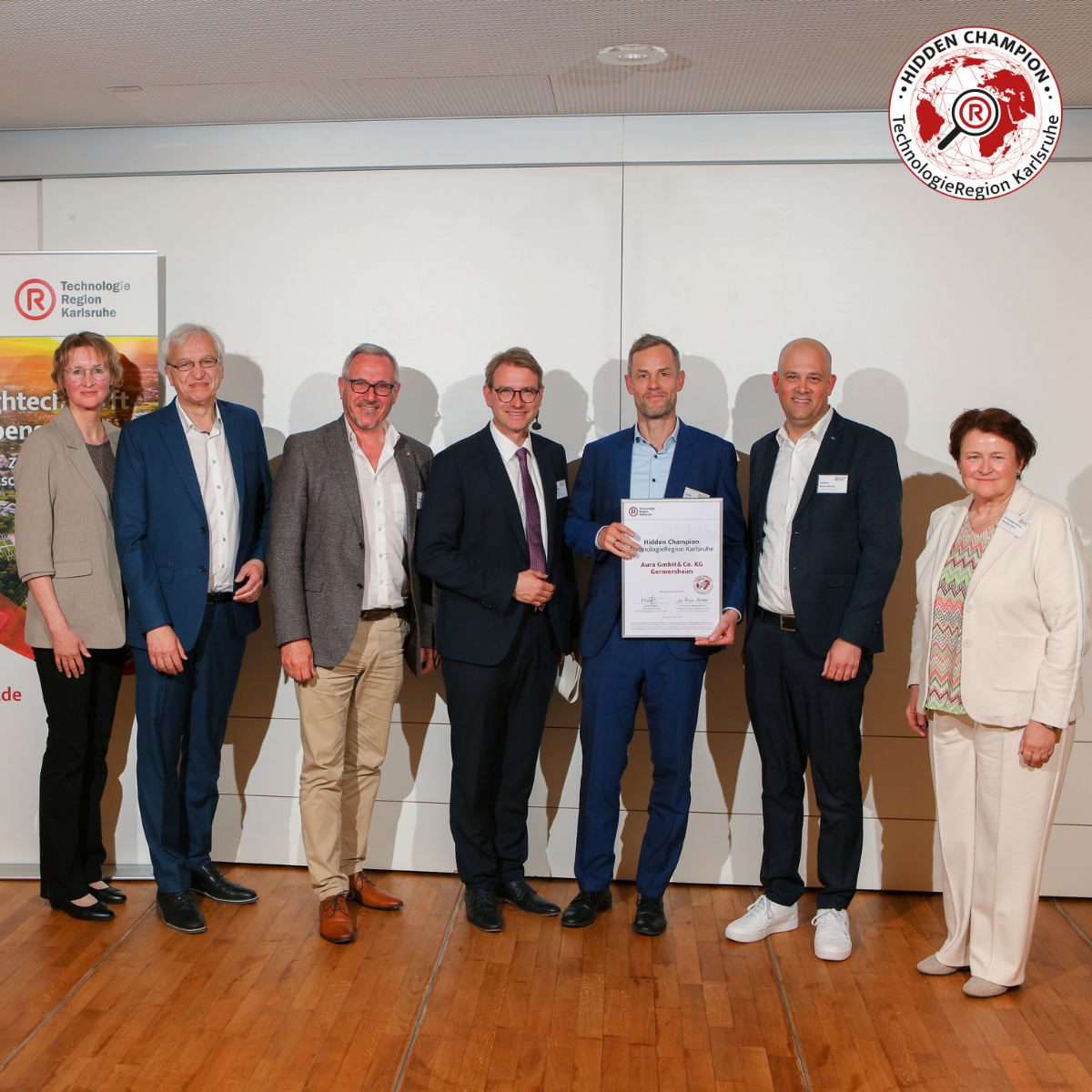
AURA has been named a Hidden Champion AURA has been officially recognized as a Hidden Champion – a distinction awarded to companies that are among the global leaders in their niche, yet operate largely outside the public spotlight. This recognition is based on a comprehensive scientific study conducted within the TechnologyRegion Karlsruhe. Hidden Champions are defined as companies that rank among the top three worldwide in their market segment or are number one on their continent, while maintaining a comparatively low public profile . For us at AURA, this award is both a confirmation and a commitment. It reflects what drives us every day: delivering high-performance solutions, focusing on innovation, and consistently meeting the needs of our customers worldwide. The award also highlights something larger than individual success. The study identified a total of 62 Hidden Champions across the TechnologyRegion Karlsruhe, representing a wide range of industries and demonstrating the region’s strong economic and innovative capacity . In addition, 25 “Hidden Gems” were identified – companies with the potential to become future global market leaders. Together, they form a powerful ecosystem of innovation, expertise, and long-term growth. The official award ceremony took place on April 30, 2026, in Kandel, bringing together leading companies, regional stakeholders, and experts. Beyond the recognition itself, the event created valuable opportunities for exchange, collaboration, and strengthening regional networks . We are proud to be part of this network of Hidden Champions – companies that combine global leadership with deep regional roots.   Being a Hidden Champion is not just about market position. It is about long-term thinking, continuous innovation, and the courage to lead transformation in highly specialized industries. At AURA, we see this recognition as an incentive to keep moving forward – as a reliable partner for our customers and as an active contributor to a strong and future-ready industrial region.

Visiting Institute for future fuels

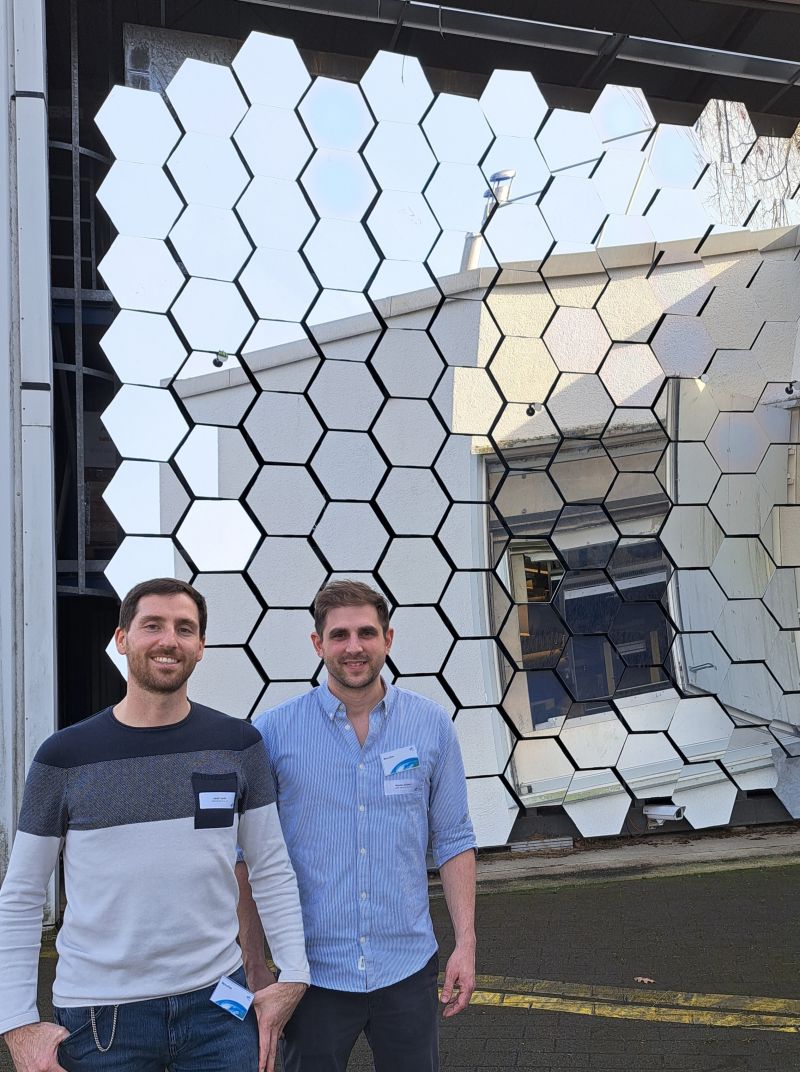
How hot should process heat be today? A few weeks ago, Jakob Leicht and Nicolas Gruessert attended the Deutsches Zentrum für Luft-und Raumfahrt e.V. (Institute of Future Fuels). One takeaway stood out: high-temperature fluids beyond the classic 400°C threshold are gaining real momentum. We’re seeing the same shift in our day-to-day work as a system manufacturer. More and more projects are moving into ranges where the engineering changes significantly, because at higher temperatures you typically face: higher thermal loads and pressures specialized components and materials a steeper jump in safety requirements Right now, AURA is managing a particularly exciting example: An electrically heated heating/cooling unit designed for up to 450°C. We built on our AURA high-temperature standard, which has already proven itself in multiple applications.The system is nearing completion, and we are looking forward to seeing our first 450°C unit commissioned at the customer site soon.