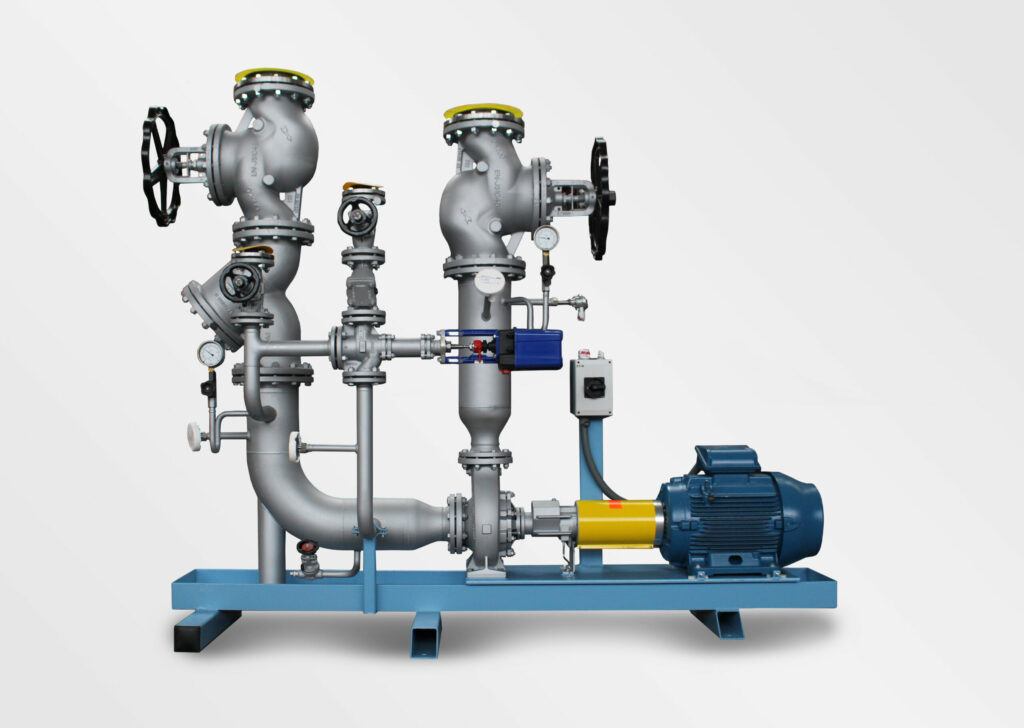
Precise process temperature control: Secondary control circuits allow the temperature to be regulated directly at individual heat consumers. This helps maintain stable process conditions and supports consistent product quality.
Independent temperature control: Different consumers can operate at different temperature levels, even when supplied by the same primary heating system.
Stable operation under changing loads: The control system adjusts the heat supply according to changes in process demand. This can reduce temperature fluctuations and improve process stability.
Heating and cooling in one system: Depending on the configuration, a secondary control circuit can include an additional cooling function. This enables controlled heating and cooling of connected process consumers.
Integration into existing systems: Secondary control circuits can be integrated into suitable existing thermal oil or water systems. This allows individual consumers to be supplied with controlled process heat without necessarily installing a separate heat generator.
Efficient use of existing heating capacity: By controlling the heat supply according to the actual demand, secondary circuits can help avoid unnecessary overheating. Potential energy savings depend on the overall system design and operating conditions.