Case study Energynest

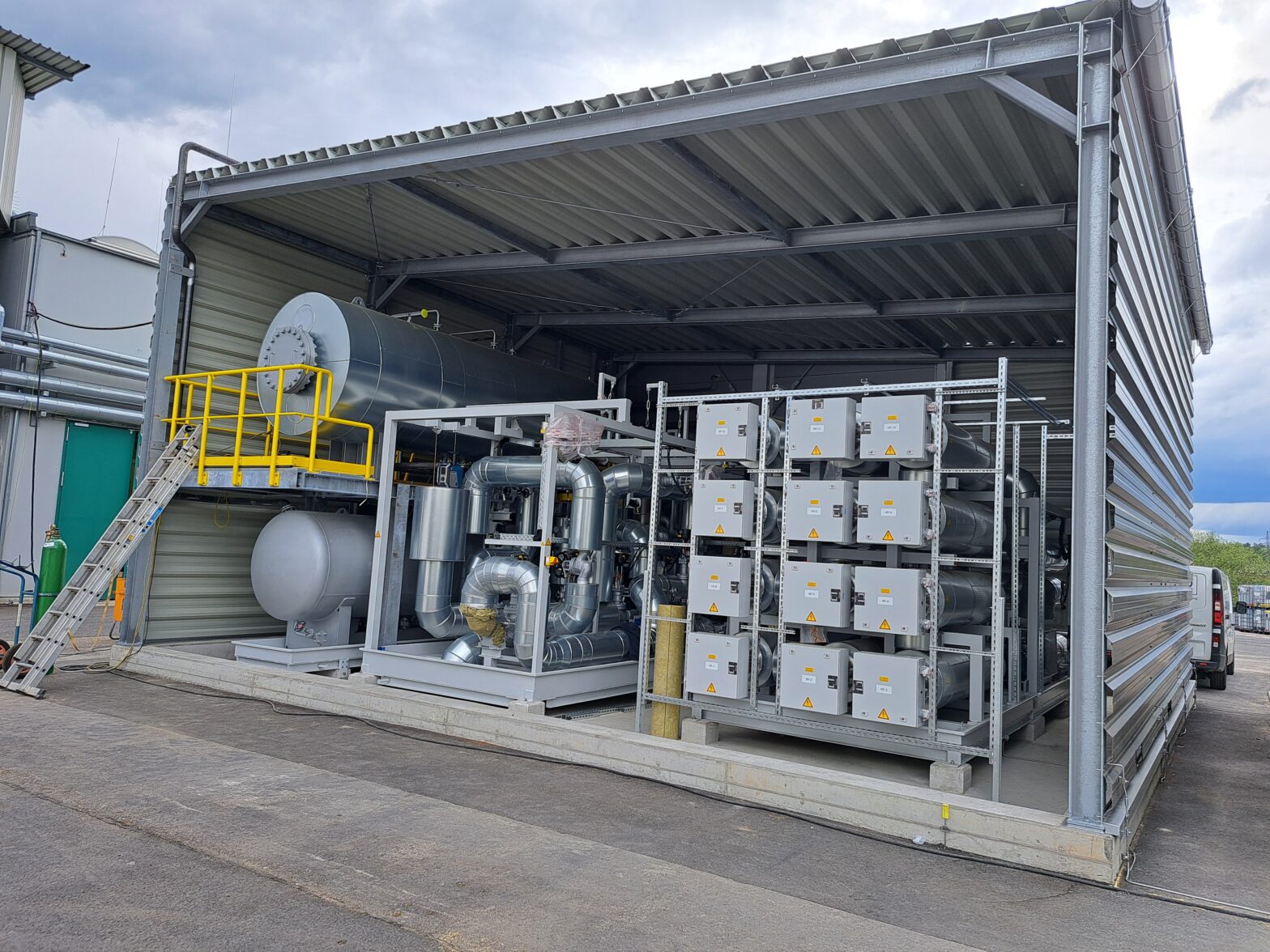
ENERGYNEST At a glance Project: Integration of a power-to-heat solution with thermal energy storage Industry: Thin-film technology Partner / Client: ENERGYNEST End Customer / Operator: Leonhard Kurz Location: Germany AURA System AURA System: Thermal oil heating system Heating Type: Electrically heated Heat Transfer Medium: Thermal oil Maximum Temperature: 390°C Heating Capacity: 3,000 kW Initial Situation   In this project, ENERGYNEST, a specialist in thermal energy storage, acts as AURA’s partner and direct client, while the solution is implemented at the facilities of the end customer, Leonhard Kurz.   Leonhard Kurz, an industry pioneer in thin-film technology, requires a reliable and continuous supply of process heat for its production processes. At its Sulzbach-Rosenberg site in Germany, KURZ consumes more than 4 GWh of thermal energy annually for process heating. Before the transition, this heat was generated entirely using natural gas.   The German family-owned company aims to achieve climate-neutral production across all of its more than 50 locations worldwide by 2040. The focus was therefore on developing an economically viable, future-proof solution that enables a flexible energy supply. Solution  To ensure a flexible, sustainable and efficient supply of process heat, a turnkey power-to-heat solution was implemented at KURZ. The system integrates AURA’s 3,000 kW electric heater and ENERGYNEST’s 12 MWhth ThermalBattery™ into the existing infrastructure. The company generates electricity through its own photovoltaic system or purchases it from the grid when electricity prices are low. AURA’s electric heater converts this electricity into high-temperature heat. In combination with ENERGYNEST’s ThermalBattery™, the generated heat can be stored and supplied independently of when it was produced. This allows energy to be used flexibly and efficiently integrated into the production process. As a result, KURZ can compensate for fluctuations in electricity availability while significantly reducing its dependence on fossil fuels. The implemented solution can cover 70% of the heat demand of one production line. This enables Leonhard Kurz to save more than 3.5 GWh of natural gas annually and reduce its CO₂ emissions by over 700 tonnes per year. Technology Spotlight: Thermal Energy Storage Thermal energy storage makes it possible to decouple heat generation from electricity consumption, allowing stored heat to be supplied whenever it is needed. Particularly when renewable energy availability fluctuates, surplus electricity can be efficiently converted into usable process heat and stored for later use. This helps balance peak loads, optimise energy costs and reduce dependence on fossil fuels. The collaboration between AURA and ENERGYNEST demonstrates how combining specialised technologies can create integrated solutions that are already suitable for industrial applications today. As renewable energy becomes increasingly available, the ability to use and store energy flexibly will continue to grow in importance. Efficient electric heat generation will therefore play an increasingly central role in the transformation of industrial energy systems. For further information on the technical implementation and potential applications, please visit: Thermal Energy Storage Solutions

Freudenberg Kaiserslautern

Freudenberg Performance Materials GmbH & Co.KG At a glance Project: Replacement of a gas-fired thermal oil system Industry: Technical textiles and nonwovens Location: Kaiserslautern, Germany AURA Solution AURA System: Thermal oil system Type of heating: Electric Heat transfer medium: Thermal oil Maximum temperature: 315°C Installed capacity: 1 MW The electrically heated thermal oil system ensures stable process conditions in nonwoven production while generating zero direct CO₂ emissions. Initial Situation Freudenberg Performance Materials is a globally leading manufacturer of technical textiles for a wide range of applications and is part of the Freudenberg Group. The family-owned company has set itself the goal of becoming CO₂-neutral by 2045 and is upgrading its existing systems accordingly.   At the Kaiserslautern site, the drum dryer required for nonwoven production was previously heated by a gas-fired system. The system generated a high level of emissions, was maintenance-intensive, and operated with low efficiency. AURA Solution AURA replaced the existing system with an efficient electrically heated thermal oil system, featuring a heating capacity of 1,000 kW and an operating temperature of 285°C. The new electrically heated system now operates emission-free, safely, and with minimal maintenance requirements. Thanks to the precise temperature control enabled by the system, the company benefits from improved process stability and energy efficiency. Und so geht es weiter…  In einem zweiten Schritt soll ein thermalölbeheizter Sekundärregelkreis an das vorhandene System angeschlossen werden. Dieser wird für einen weiteren Trocknungsprozess benötigt und nutzt dazu die verbleibende Leistung der neuen elektrisch beheizten Thermalölanlage. Diese Erweiterung befindet sich aktuell bei AURA in der Fertigstellung und wird noch in diesem Jahr in Betrieb genommen.  Wir freuen uns sehr, Freudenberg auf dem Weg zur CO2-Neutralität als Partner begleiten zu dürfen und bedanken uns für das Vertrauen! 

Kroll & Ziller

Kroll & Ziller At a glance Project: Modernization of an outdated steam system Industry: Manufacturing of technical seals and flange connections Location: Germany AURA Solution AURA System: Electric thermal oil system Heating type: Electric Heat transfer medium: Thermal oil Maximum temperature: 300°C Power: 100kW The electric thermal oil system ensures a significantly more stable production process, reduced energy costs, and zero direct CO₂ emissions. Initial situation For over 80 years, Kroll & Ziller GmbH & Co. KG has been manufacturing high-quality sealing solutions – including for the food industry, chemical sector, mining, and drinking water supply. Industrial process heat is essential here to shape materials, cure them, and ensure long-term functionality.  Until now, the presses used in the vulcanization process at Kroll & Ziller were operated with a fuel-fired steam system – a setup associated with high energy consumption, intensive maintenance, and significant operating costs. The objective: A modern, efficient system to reduce the carbon footprint.  AURA solution In this project, we implemented two key technology shifts:  1.Transition from fuel-fired to electric heating: The new electrically heated system now operates emission-free, safely, and with minimal maintenance. Thanks to precise temperature control, Kroll & Ziller benefits from increased process stability and improved energy efficiency.  2.Conversion from steam to thermal oil as the heat transfer medium: Thermal oil can be operated at high temperatures with virtually no pressure, reducing requirements for pressure vessels, piping systems, and safety valves.